Blogs

Walking by Faith When Life Feels Unclear

There are seasons when life does not make sense. The path feels uncertain, answers seem delayed, and the heart longs for clear direction. In those moments, walking by faith becomes more than a familiar Christian phrase. It becomes a daily choice to trust God when we cannot see the full picture.

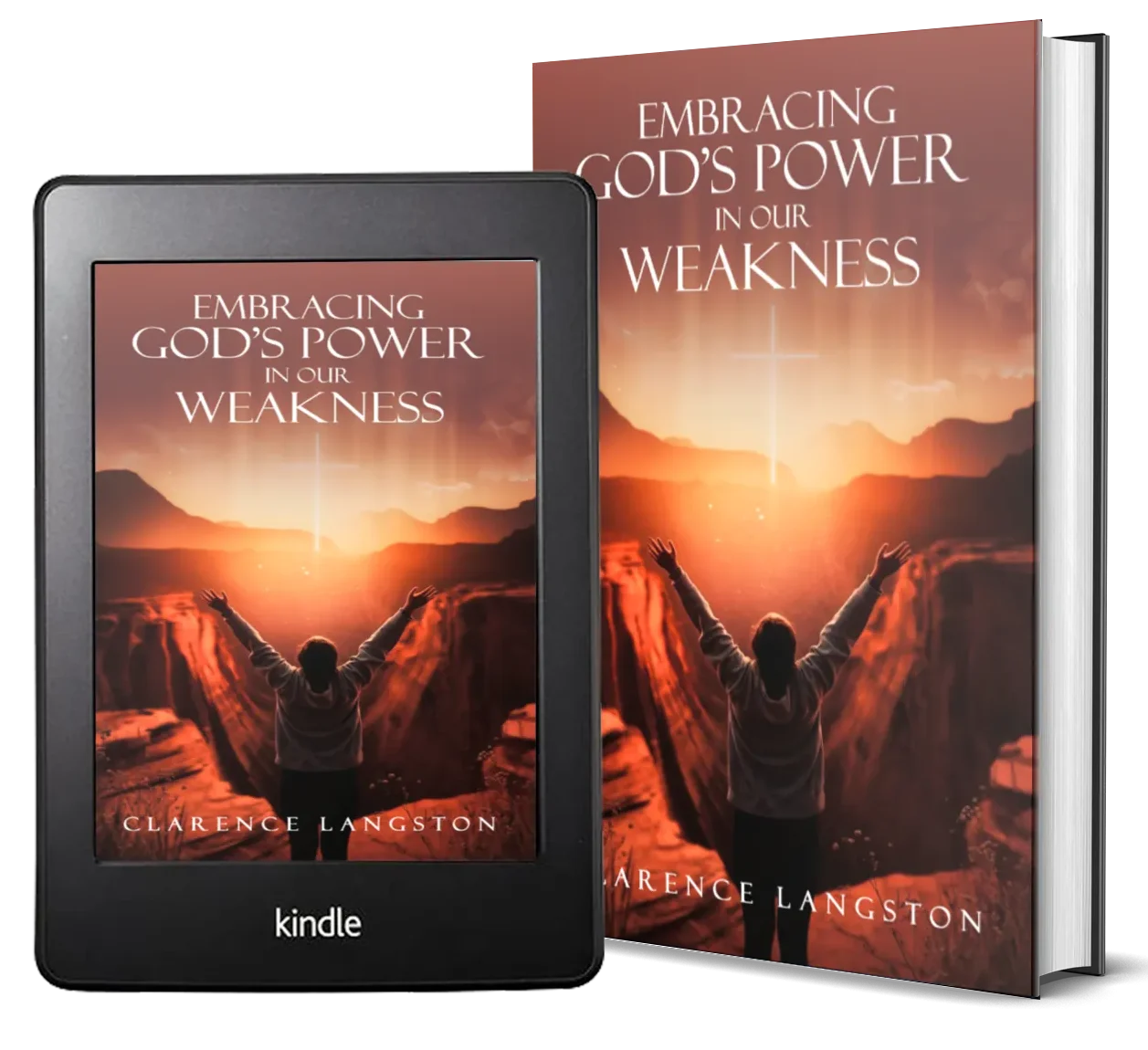
Embracing God’s Power in Our Weakness by Clarence Langston speaks to this kind of season with wisdom and encouragement. The book reminds readers that faith is not the absence of questions. It is the decision to keep trusting God while carrying those questions in His presence.

Walking by faith means believing that God is still leading, even when the road ahead feels hidden. It means taking the next obedient step without demanding to know every detail. It means resting in the truth that God sees what we cannot see and understands what we cannot yet understand.

Many believers feel discouraged when uncertainty exposes fear or weakness. They may wonder if stronger faith would make them feel more confident. Yet Scripture shows that God often calls people forward before they feel ready. Moses felt unqualified. Gideon was afraid. David faced a giant with what looked like too little. Still, God met each one with strength for the assignment.

Clarence Langston reminds readers that weakness does not disqualify a person from walking with God. In fact, uncertainty can become a place where faith grows deeper. When we reach the end of our own understanding, we learn to depend on God’s wisdom. When our plans feel fragile, we learn to trust His purpose. When our strength feels small, we discover that His grace is enough.

Walking by faith also requires surrender. We release the need to control every outcome and trust that God’s timing is not careless. Waiting does not mean He has forgotten us. Silence does not mean He is absent. Closed doors do not mean the story is over. God is able to guide, provide, restore, and strengthen in ways we could not have planned.

For readers facing uncertainty, Embracing God’s Power in Our Weakness offers steady hope. It points the heart back to prayer, humility, grace, and trust in God’s presence. The book encourages believers to stop measuring their future by present fear and start seeing their weakness as a place where God’s power can shine.

You may not know every step ahead, but you can know the One who walks with you. Faith does not require a clear road. It requires a willing heart. When life feels unclear, God remains faithful, and His strength is enough for the journey.
Receiving Supernatural Strength for Daily Life

Daily life can quietly drain the soul. Responsibilities pile up, worries press in, relationships require patience, and private battles often continue behind the scenes. Even when everything looks normal on the outside, many people are carrying more than others know. Human strength has limits, but God offers a strength that is greater than what we can produce on our own.

Embracing God’s Power in Our Weakness by Clarence Langston reminds readers that supernatural strength is not only for dramatic moments. It is available for ordinary days, difficult conversations, long waiting seasons, silent tears, and every moment when the heart feels weak.

God’s strength does not always arrive with noise. Sometimes it comes as peace when anxiety rises. Sometimes it comes as patience when frustration builds. Sometimes it comes as courage to keep going when the body is tired and the spirit feels low. It may come through prayer, Scripture, worship, fellowship, or the quiet help of the Holy Spirit.

Receiving supernatural strength begins with honesty. We must stop pretending we are able to carry everything alone. God is not offended by our weakness. He invites us to bring it to Him. When we admit our need, we make room for His grace to work in us.

Clarence Langston encourages readers to see weakness as a place where God’s power can be revealed. The believer does not have to live under the pressure of constant strength. Faith allows us to say, “Lord, I need You today,” and trust that He will provide what we need for the moment in front of us.

Supernatural strength also grows through dependence. It comes when we choose prayer over panic, surrender over control, and trust over fear. It comes when we stop measuring our future by our own ability and remember that God is able to sustain us step by step.

This kind of strength does not always remove the challenge, but it changes how we face it. The burden may still be present, but we are no longer carrying it alone. The season may still be hard, but grace gives the soul endurance. The path may still be unclear, but God gives light for the next step.

For anyone who feels tired, overwhelmed, or spiritually worn down, Embracing God’s Power in Our Weakness offers biblical encouragement and renewed hope. It reminds readers that God’s strength is personal, present, and enough for daily life.

You do not have to wait until you feel strong to move forward. God can meet you in weakness and give you strength for today. His power is not limited by your exhaustion. His grace can carry you, renew you, and help you keep walking with faith.

Pride Versus Humility: Why Surrender Opens the Door to Grace

Pride tells us to hold everything together by ourselves. It says we must always be right, always appear strong, and never admit need. Humility leads us in another direction. It brings us before God with an honest heart and says, “Lord, I need You.”

Embracing God’s Power in Our Weakness by Clarence Langston reminds readers that pride and humility shape the way we receive from God. Pride closes the heart. Humility opens it. Pride depends on personal strength. Humility depends on grace. Pride resists correction. Humility remains teachable.

Many people think pride only looks like arrogance, but it can also appear as quiet self-reliance. It may show up when we refuse help, hide our struggles, or try to control every outcome. It can make us believe we are safer carrying our burdens alone. Yet that kind of strength eventually becomes exhausting.

Humility does not mean seeing ourselves as worthless. It means seeing ourselves truthfully before God. We are loved, valuable, and created with purpose, but we are also dependent on the One who gives breath, wisdom, strength, and mercy. When we accept this truth, we stop striving to prove ourselves and begin resting in God’s sufficiency.

Surrender is the turning point. It is the moment we release our need to control and invite God to lead. It is choosing His wisdom over our own understanding, His timing over our impatience, and His strength over our limited ability. Surrender is not defeat. It is trust.

Clarence Langston points readers back to the beauty of a humble life. When we surrender, grace begins to meet us in deeper ways. Grace gives strength when we are weary, peace when we are anxious, correction when we are drifting, and courage when we feel weak. God does not pour grace into a heart that is pretending to need nothing. He meets the heart that comes honestly.

This message is especially powerful for believers who feel tired from carrying everything alone. Embracing God’s Power in Our Weakness offers biblical encouragement for those ready to lay down pride and receive God’s help. It reminds readers that weakness brought to God is not shameful. It is sacred ground where grace can work.

Pride keeps us striving. Humility lets us receive. Pride says, “I can manage.” Humility says, “God, lead me.” And in that place of surrender, grace opens the door to strength, freedom, and a deeper walk with Him.

Living Confidently in God’s Strength, Not Your Own

True confidence is not built on pretending to have everything under control. It is built on knowing that God is faithful, present, and strong enough to carry what we cannot. When our own strength runs low, His strength does not weaken.

Embracing God’s Power in Our Weakness by Clarence Langston reminds readers that confidence in the Christian life is not self reliance. It is God reliance. The believer does not have to live under the pressure of appearing strong all the time. God invites us to bring Him our fear, exhaustion, uncertainty, and limitations, trusting that His grace will meet us there.

Many people mistake confidence for independence. They think strength means never needing help, never admitting weakness, and never feeling afraid. But Scripture tells a different story. God often works through those who know they cannot do it alone. Moses felt unqualified. Gideon felt small. David seemed unlikely. Paul carried a thorn. Yet each life became a testimony of what God can do through surrender.

Living confidently in God’s strength begins when we stop measuring our future by our own ability. We may not have every answer. We may not feel ready. We may still carry burdens that feel too heavy. But God is not limited by what we lack. His strength fills the places where ours falls short.

Clarence Langston encourages readers to see weakness not as a reason to shrink back, but as a place where God’s power can be revealed. This changes how we face life. We can pray with honesty. We can step forward in faith. We can serve without fear of inadequacy. We can endure difficult seasons knowing that grace is still holding us.

Confidence in God also brings peace. We no longer need to prove our worth through constant striving. We do not need to hide every struggle or carry every burden alone. The same God who calls us also sustains us. The same God who sees our weakness also supplies strength for the journey.

For anyone who feels tired of relying on their own effort, Embracing God’s Power in Our Weakness offers a needed reminder: God’s strength is enough. The book points readers toward humility, prayer, faith, and daily dependence on the Holy Spirit.

You can live with courage even when you feel weak. You can move forward even when the path feels hard. You can trust God even when your own strength is gone. Confidence is not found in having no limits. It is found in belonging to the One whose power has no limit.

Lessons From Paul’s Thorn in the Flesh

Paul’s thorn in the flesh speaks to every believer who has prayed for relief and still had to keep walking with the burden. It reminds us that faith does not always remove pain immediately. Sometimes faith teaches us how to trust God while the struggle remains.

Embracing God’s Power in Our Weakness by Clarence Langston brings this truth to life with warmth and biblical depth. The book reminds readers that Paul’s thorn was not the end of his ministry, his purpose, or his usefulness to God. Instead, it became the place where God revealed a greater lesson: His grace is sufficient, and His power is made perfect in weakness.

Paul asked God more than once to take the thorn away. Many believers understand that prayer. They have asked God to remove sickness, fear, grief, rejection, insecurity, family pain, financial strain, or an inward battle that feels too heavy to carry. When the answer does not come as expected, the heart can wonder if God is listening.

Paul’s story gives us a clear answer. God was listening. But instead of removing the thorn, He gave Paul grace to endure it. That grace was not second best. It was divine strength meeting human weakness.

This is one of the greatest lessons from Paul’s life. Weakness does not make a person useless in God’s hands. It can become the place where pride is broken, prayer grows deeper, and dependence on God becomes real. Paul did not boast in his strength. He learned to glory in the grace that sustained him when his own strength was not enough.

Clarence Langston encourages readers to stop treating weakness as shame. A thorn may humble us, but it can also teach us. It can remind us that we are not self sufficient. It can draw us closer to God. It can make us more compassionate toward others who are hurting. It can turn our private pain into a testimony of God’s faithfulness.

The thorn also teaches surrender. We may not always understand why God allows certain struggles to remain, but we can trust His character. He is not cruel. He is not distant. He is present in the pain, offering strength for today and hope for what lies ahead.

For anyone carrying a thorn of their own, Embracing God’s Power in Our Weakness offers comfort and courage. It points readers back to the God who does not waste weakness and does not abandon His people in suffering.

Paul’s thorn did not stop God’s purpose. Your thorn does not have to stop yours. In the place where you feel weakest, God’s grace can still be enough, and His strength can still shine.

Jacob’s Limp: How Brokenness Can Become a Blessing

Brokenness often feels like something to hide. People carry wounds, regrets, weaknesses, and painful memories quietly, hoping no one will notice the limp in their walk. Yet in the hands of God, what appears broken can become a lasting sign of grace, transformation, and blessing.

Embracing God’s Power in Our Weakness by Clarence Langston draws attention to Jacob’s story as a powerful picture of how God can meet a person in struggle and leave them changed. Jacob wrestled through the night and received a blessing, but he also walked away with a limp. That limp became more than a physical weakness. It became a reminder that he had encountered God and would never be the same.

Many believers understand this kind of limp. It may not be visible, but it is real. It may come from grief, failure, rejection, disappointment, illness, fear, or a long season of struggle. At first, brokenness may feel like loss. It may feel like something has been taken. But God can use even that place to draw the heart closer to Him.

Jacob’s limp teaches us that blessing and weakness can exist together. A person can be wounded and still be chosen. A person can carry pain and still walk in purpose. A person can have limitations and still be held by God’s strength. Brokenness does not mean God has abandoned the story. Sometimes it marks the place where He has begun a deeper work.

Clarence Langston reminds readers that weakness can become a testimony when surrendered to God. Jacob could no longer walk as he once did, but he walked with a new identity. His struggle became part of his witness. His limp told the story of surrender, dependence, and divine encounter.

This brings hope to anyone who feels defined by what they have endured. Your broken place is not useless. God can use it to teach humility, deepen compassion, strengthen faith, and remind you that your life is sustained by grace. What once caused pain can become a place where others see God’s faithfulness.

Embracing God’s Power in Our Weakness offers biblical encouragement for readers who are learning to see their struggles through God’s eyes. It points to the truth that God does not waste pain entrusted to Him. He can bring purpose out of wounds and strength out of surrender.

Jacob’s limp was not the end of his blessing. It became part of it. In the same way, your brokenness does not have to be the end of your story. With God, even the limp can become a reminder that grace has touched your life.

God Does Not Call the Qualified, He Qualifies the Called

Many people delay obedience because they feel unqualified. They believe they need more confidence, more experience, more knowledge, or a stronger past before God can use them. Yet the Bible shows a different pattern. God often calls people who feel weak, hesitant, overlooked, or unprepared, and then He gives them what they need for the work ahead.

Embracing God’s Power in Our Weakness by Clarence Langston speaks to this powerful truth. The book reminds readers that God’s calling is not based on human perfection. It is based on His purpose, His grace, and His power working through surrendered lives.

Moses felt unable to speak well. Gideon saw himself as the least in his family. David was dismissed because of his youth. Peter failed under pressure. Paul carried a thorn. Still, God used each of them in meaningful ways. Their lives prove that feeling unqualified does not mean being rejected by God.

When God calls someone, He already knows their weakness. He knows the fear, the insecurity, the past mistakes, and the places where confidence feels small. None of it surprises Him. He does not call people because they have everything together. He calls them because He knows what His strength can accomplish through them.

This truth brings freedom to the believer who feels inadequate. You do not have to wait until you feel perfect to say yes to God. You do not have to hide your limitations or pretend to be stronger than you are. Obedience begins with trust, not flawless confidence.

Clarence Langston encourages readers to see weakness as a place where God’s power can be revealed. The very area that makes a person feel unqualified may become the place where God displays His grace most clearly. When we depend on Him, our limitations no longer define the outcome. His strength does.

God equips as He leads. He gives wisdom for the assignment, courage for the step, grace for the burden, and strength for the journey. He may use people, prayer, Scripture, training, time, and even difficult seasons to shape the called person into someone prepared for purpose.

For anyone who has ever thought, “God cannot use me,” Embracing God’s Power in Our Weakness offers biblical encouragement and hope. It reminds readers that God is not searching for perfect vessels. He is looking for willing hearts.

You may feel unqualified, but God is not limited by what you lack. When He calls, He also strengthens. When He sends, He also equips. And when you surrender your weakness to Him, He can turn your yes into a testimony of His power.

From Fear to Faith: Lessons From Gideon’s Story

Fear has a way of making people feel small. It whispers that they are not ready, not gifted enough, not brave enough, and not the right person for the task ahead. Gideon knew that feeling well. When God called him to deliver Israel, Gideon did not respond with confidence. He questioned his worth, his family background, and his ability to do what God had asked.

Embracing God’s Power in Our Weakness by Clarence Langston uses Gideon’s story to remind readers that fear does not cancel God’s calling. Gideon saw himself as weak, but God saw what His strength could do through a willing heart.

This is one of the most comforting truths in the Christian life. God does not wait for us to feel fearless before He calls us forward. He speaks to purpose before we can fully see it in ourselves. Gideon was hiding when God called him a mighty warrior. That means God was not defining Gideon by his fear. He was defining him by divine purpose.

Many believers struggle with the same tension. They sense God leading them, yet fear rises quickly. Fear of failure. Fear of rejection. Fear of being unqualified. Fear of not having enough strength. But Gideon’s story shows that God’s presence is greater than our fear.

Clarence Langston encourages readers to see that courage is not the absence of fear. Courage is obedience while fear is still present. Gideon did not become bold all at once. God guided him step by step, strengthening his faith along the way. That is often how God works with us. He does not shame us for trembling. He teaches us to trust Him as we move forward.

The lesson is clear: victory does not come from human confidence alone. It comes from reliance on God. Gideon’s army was reduced so that the victory would clearly belong to the Lord. What looked like weakness became the setting for God’s power.

For readers facing fear, uncertainty, or a God given assignment that feels too large, Embracing God’s Power in Our Weakness offers timely encouragement. It reminds believers that God can use the unlikely, the hesitant, and the fearful when they surrender to Him.

Your fear is not stronger than God’s call. Your insecurity is not greater than His power. Like Gideon, you may feel unqualified, but God sees more than your present weakness. He sees what His strength can accomplish through your obedience.

Faith begins when fear meets the promise of God and chooses to take the next step anyway.

How God’s Power Is Made Perfect in Your Weakness (What Most Christians Miss)

Most people naturally avoid weakness. It feels uncomfortable, discouraging and often embarrassing. In a world that celebrates strength, confidence and self-reliance, weakness is usually seen as something to fix, hide or overcome quickly. But in the Christian life, weakness is not something God rejects; it is often the very place where He reveals Himself most powerfully.

This is one of the central revelations in Clarence Langston’s Embracing God’s Power in Our Weakness: God does not wait for you to become strong before He uses you. Instead, He steps into your weakness and demonstrates His strength through it.

Weakness Is Not the End of God’s Work

Many believers mistakenly assume that their limitations disqualify them from God’s purpose. They feel unworthy because of past failures, emotional struggles or present challenges. But Scripture tells a different story. The Apostle Paul writes in 2 Corinthians 12:9, “My grace is sufficient for you, for my power is made perfect in weakness.”

This means God’s power is not limited by your weakness; it is revealed through it.

Weakness, in God’s hands, becomes an opportunity rather than a limitation. It becomes the stage where divine strength is displayed. When human ability ends, God’s ability begins to shine.

What Most Christians Miss About Strength

Many Christians spend their lives trying to “fix” their weaknesses before coming to God in confidence. They think they need to be more disciplined, more spiritual or more capable before God can truly use them.

But this mindset misses a critical truth: God is not looking for your sufficiency; He is looking for your surrender.

When you finally stop striving in your own strength, you create space for God’s strength to work in you. That is where transformation begins.

Clarence Langston emphasizes that God’s grace is not just forgiveness; it is empowerment. Grace is the divine ability that enables you to do what you could never do on your own.

Weakness Becomes a Platform for God’s Glory

Think of the people God used throughout Scripture:

  • Moses said he could not speak well, yet God used him to confront Pharaoh.
  • Gideon saw himself as the weakest in his family, yet God called him a mighty warrior.
  • Paul carried weakness in his body, yet became one of the most powerful apostles in history.

In each case, weakness was not a barrier; it was a doorway for God’s power.

When you embrace this truth, your perspective changes. You stop seeing weakness as failure and begin seeing it as a form of dependence. And dependence on God is where true strength begins.

The Role of the Holy Spirit in Your Weakness

One of the most powerful truths explored in Embracing God’s Power in Our Weakness is the role of the Holy Spirit. Romans 8:26 reminds us that when we are weak and do not know what to pray, the Spirit Himself intercedes for us.

This means you are never alone in your struggle. Even in silence, confusion or emotional exhaustion, the Holy Spirit is actively at work, strengthening and guiding you.

God does not just watch your weakness; He enters it with you.

A Life Transformed by Grace

Living in this truth changes everything. Instead of hiding your struggles, you begin to surrender them. Instead of pretending to be strong, you rely on God’s strength. Instead of fear, you walk in faith.

This is the heart of Clarence Langston’s message: God is not asking you to be perfect; He is inviting you to trust His power in your imperfection.

When you embrace your weakness, you don’t lose strength; you discover a greater one.

Final Thought

Your weakness is not your limitation; it is your invitation. An invitation to experience the power, presence and grace of God in a deeper way than you ever imagined.

Embracing God’s Power in Our Weakness will guide you into this truth, helping you see your life through a new lens in which every weakness becomes a testimony to God’s strength at work within you.

When You Feel Empty, God Fills You: The Role of the Holy Spirit in Weakness

There are seasons in life when everything feels empty. Strength is gone, motivation is low, prayers feel dry and even faith can feel distant. These moments of inner emptiness can be deeply unsettling, especially for believers who desire to live strong and purposeful lives in Christ. Yet Scripture reveals a powerful truth: emptiness is not the end; it is often the very place where God begins to fill. This divine exchange is beautifully explored in Embracing God’s Power in Our Weakness by Clarence Langston, a book that helps believers understand how the Holy Spirit meets us in our weakest, most depleted moments with supernatural strength.

Feeling empty is not a sign that God has abandoned you. Instead, it is often an invitation to depend more deeply on Him. Human strength is limited and when it runs out, it opens the way for divine strength to take over. This is where the Holy Spirit steps in as Comforter, Helper and Strengthener. Jesus promised in John 14:26 that the Holy Spirit would teach, guide and remind believers of everything He has spoken. That means even in emotional and spiritual emptiness, God has not left His people without direction or support.

One of the most powerful truths in Scripture is found in 2 Corinthians 12:9, where God declares, “My grace is sufficient for you, for My power is made perfect in weakness.” Emptiness is not wasted in God’s hands. It becomes the very place where His power is revealed. When human ability ends, divine ability begins to flow. The Holy Spirit fills what we cannot sustain on our own.

Romans 8:26 further reveals the Spirit’s role in weakness: “The Spirit helps us in our weakness.” Even when believers do not know what to pray, the Holy Spirit intercedes with groanings beyond words. This means that emptiness is never truly empty when the Spirit of God is present. Even silence becomes sacred when the Holy Spirit is actively working within it.

The Holy Spirit also fills believers with peace when anxiety and confusion attempt to take over. In John 14:27, Jesus promises peace that the world cannot give. This peace is not dependent on circumstances; it is the result of God’s presence dwelling within. When the heart feels drained, the Holy Spirit restores calm and reminds believers that they are not alone.

Another way the Holy Spirit fills emptiness is through renewal. Isaiah 40:31 says those who wait on the Lord will renew their strength. Renewal is not self-generated; it is Spirit-driven. The Holy Spirit revives what feels worn out, restores what feels lost and reignites what feels spiritually dry. Emptiness becomes the starting point for renewal, not the conclusion of strength.

The early church experienced this filling in Acts 2, when the Holy Spirit came upon believers gathered in unity and prayer. What began as waiting turned into empowerment. Fearful disciples became bold witnesses. Empty vessels became carriers of divine power. This same Holy Spirit is still active today, filling believers with courage, wisdom and strength in moments of weakness.

Community also plays a role in this filling process. God often uses fellow believers to encourage, pray and speak life into those who feel empty. Through fellowship, the Holy Spirit flows not only inwardly but also through relationships that reflect God’s care and presence.

Ultimately, emptiness is not something to fear; it is something to surrender. It is in these moments that believers learn to stop relying on themselves and begin relying fully on God’s Spirit.

Embracing God’s Power in Our Weakness by Clarence Langston invites readers into this transformative understanding. It reveals that emptiness is not a void to be avoided but a space where God’s Spirit moves powerfully. Through biblical truth and spiritual insight, the book shows that when you feel empty, you are not forgotten; you are being prepared to be filled.

Because where human strength ends, the Holy Spirit begins to overflow.

How to Hear God Clearly When You Feel Weak and Confused

There are moments in life when clarity feels out of reach. Decisions become overwhelming, prayers feel unanswered and the heart wrestles with confusion. In these seasons, weakness can make it even harder to discern God’s voice. Yet Scripture consistently shows that God is not distant in confusion; He is present in it. In fact, some of the clearest encounters with God happen in seasons of human limitation. This powerful truth is explored in Embracing God’s Power in Our Weakness by Apostle Clarence Langston, a book that helps believers recognize that weakness is often the very place where God speaks most clearly.

Hearing God is not reserved for the strong, confident or spiritually elite. It is available to every believer, especially in moments of weakness. The challenge is not that God is silent, but that weakness, fear and distraction can cloud spiritual sensitivity. This is why Scripture repeatedly invites believers to shift their focus from circumstances to God’s presence.

One of the most foundational truths is found in John 10:27, where Jesus says, “My sheep hear my voice and I know them and they follow me.” This verse reveals that hearing God is relational before it is informational. It is not about perfect spiritual performance; it is about belonging to the Shepherd. Even in confusion, believers are still known by God and still capable of hearing His voice.

When weakness sets in, clarity often begins with surrender. Proverbs 3:5–6 instructs believers to trust in the Lord with all their heart and lean not on their own understanding. This means that confusion is not solved by overthinking but by yielding. God’s direction becomes clearer when self-reliance is released. In moments of weakness, surrender creates space for divine guidance.

The Holy Spirit plays a central role in helping believers hear God clearly. Jesus promised the Holy Spirit as a Helper, Teacher and Guide in John 14:26. In times of confusion, the Spirit brings remembrance, clarity and peace. Romans 8:26 also reminds believers that when they do not know how to pray, the Spirit intercedes. This means that even when words fail and thoughts are scattered, God is still actively communicating through His Spirit.

Another key principle is found in stillness. Psalm 46:10 says, “Be still and know that I am God.” Weakness often produces noise within the heart, fear, anxiety and mental overload. But stillness creates space to recognize God’s voice. It is not always in dramatic signs, but often in quiet assurance, gentle conviction and peace that surpasses understanding.

Scripture is also one of God’s clearest channels of communication. Psalm 119:105 declares, “Your word is a lamp to my feet and a light to my path.” When confusion clouds direction, God’s Word brings stability. The Holy Spirit uses Scripture to align thoughts with truth, correct misunderstandings and provide guidance that is consistent with God’s character.

Community also plays an important role in hearing God clearly. God often confirms His direction through wise counsel and godly relationships. Proverbs 15:22 reminds believers that plans succeed with many advisers. In seasons of weakness, spiritual community becomes a place where clarity is strengthened and confusion is challenged.

Ultimately, hearing God in weakness is not about eliminating struggle but learning to listen within it. God does not wait for perfect conditions to speak; He speaks in the middle of uncertainty, inviting believers to trust Him even when understanding is limited.

Embracing God’s Power in Our Weakness by Apostle Clarence Langston guides readers into this deeper reality. It reveals that weakness is not a barrier to God’s voice but often the environment where His presence becomes most intimate. Through biblical teaching and spiritual insight, the book helps believers move from confusion to clarity, from noise to peace and from uncertainty to trust.

When you feel weak and confused, God is not far away. He is speaking often more clearly than you realize, inviting you to listen, trust and follow.

How God Turns Brokenness into Breakthroughs Through His Grace

Brokenness is a reality every person encounters at some point in life. It may come through failure, loss, disappointment, weakness or seasons where nothing seems to work despite our best efforts. In these moments, it is easy to believe that brokenness is the end of the story. Yet Scripture reveals a very different truth: God does not discard broken people; He transforms them. He turns brokenness into breakthroughs through His grace. This powerful biblical truth is at the heart of Embracing God’s Power in Our Weakness by Apostle Clarence Langston, a book that guides readers into understanding how God’s strength is revealed most clearly in human limitation.

The message of the gospel consistently shows that God specializes in working through broken things. From the beginning of Scripture, we see a pattern where God chooses the unlikely, restores the wounded and strengthens the weak. This is not accidental; it is intentional. God’s grace is designed to meet people exactly where they are, not where they think they should be.

One of the most powerful revelations in Scripture is found in 2 Corinthians 12:9, where God declares, “My grace is sufficient for you, for My power is made perfect in weakness.” This verse reshapes how believers understand brokenness. Instead of being a disqualification, brokenness becomes the very condition where God’s power is revealed. Grace is not just forgiveness; it is divine empowerment. It lifts, restores and strengthens what human effort cannot fix.

Throughout the Bible, God consistently turns brokenness into breakthrough moments. Joseph was betrayed, abandoned and imprisoned, yet God used his broken journey to position him for leadership and deliverance. David experienced rejection and seasons of hiding, yet God used him to become a king after His own heart. Peter denied Jesus at his weakest moment, yet, through grace, he became a bold leader in the early church. These stories reveal a consistent truth: God does not waste brokenness; He redeems it.

The Holy Spirit plays a vital role in this transformation. Jesus promised the Holy Spirit as our Helper, Comforter and Strengthener. In moments of brokenness, when words fail and strength is gone, the Holy Spirit steps in to sustain, guide and rebuild. Romans 8:26 reminds us that the Spirit helps us in our weakness and intercedes for us when we cannot even pray properly. This means no broken moment is ever beyond God’s reach or attention.

Grace also shifts how believers respond to brokenness. Instead of hiding pain or pretending to be strong, grace invites honesty before God. It allows people to come openly with their wounds, fears and failures. Hebrews 4:16 encourages believers to approach God’s throne of grace with confidence, where they find mercy and help in times of need. Brokenness, when placed in God’s hands, becomes the beginning of healing.

Another powerful truth is that God often uses community as part of the breakthrough process. Ecclesiastes 4:9–10 reminds us that two are better than one because they can lift each other up. In seasons of brokenness, God frequently sends people to encourage, support and strengthen us. Healing often comes through relationships that reflect God’s love in practical ways.

What makes grace so powerful is that it does not simply restore, but transforms. God does not just repair what is broken; He often creates something stronger, deeper and more meaningful through it. What once caused pain becomes a testimony. What once looked like failure becomes a foundation for purpose.

Embracing God’s Power in Our Weakness by Apostle Clarence Langston invites readers to see brokenness through the lens of grace. It reveals that no life is too fractured, no story too damaged and no situation too far gone for God to redeem. Through biblical truth, practical insight and spiritual encouragement, the book leads readers into a deeper understanding that God is not intimidated by brokenness; He is attracted to it.

In the hands of God, brokenness is never the end. It is the beginning of a breakthrough.